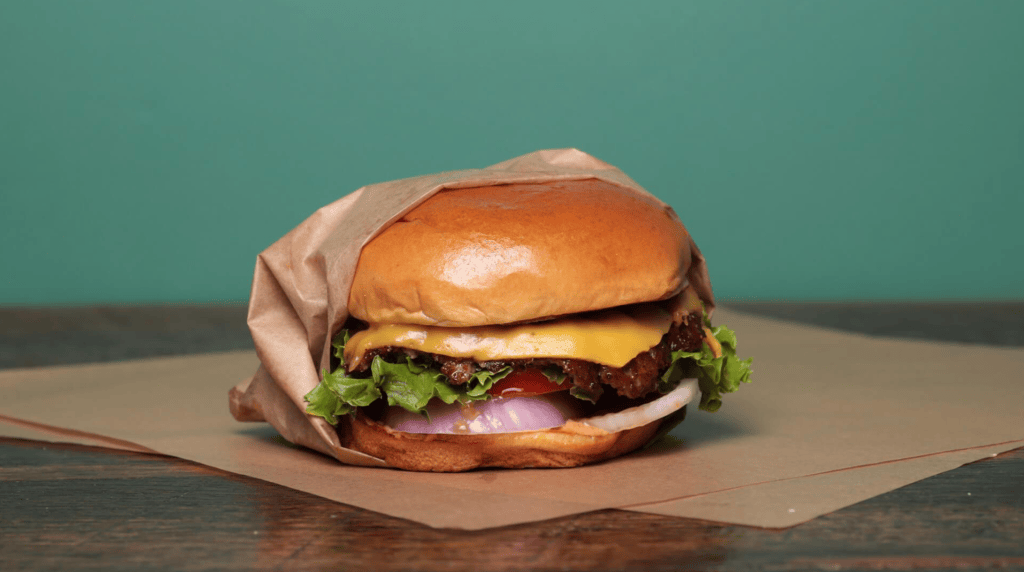
Third-party delivery platforms have changed the way restaurants reach their customers.
Services such as DoorDash, Uber Eats and Grubhub can help restaurants attract new customers, increase their reach and generate additional orders without relying exclusively on customers walking through the door.
But there is a catch.
Every delivery order comes with costs, and one of the biggest is the commission charged by the delivery platform.
For restaurant owners, the challenge is not simply generating more sales. It is making sure those sales are priced correctly to protect the business’s margins.
One common mistake is assuming that increasing menu prices by the same percentage as the platform’s commission will cover the cost.
Unfortunately, the maths does not work that way.
Let’s look at why, how to calculate the correct price, and what restaurant owners should consider before deciding whether third-party delivery makes financial sense.
Why Increasing Your Prices by 15% Isn’t Enough
Imagine you run a restaurant and sell a cheeseburger for $10.
For the purposes of this example, we’ll assume your restaurant uses a dual-pricing model:
- Cash price: $10.00
- Card price: $10.40
The restaurant has structured its pricing to account for the cost of accepting card payments while preserving the economics of its original $10 cash price, subject to its actual processing costs.
Now, you decide to list that same cheeseburger on a third-party delivery platform.
For this example, let’s assume the platform charges a 15% commission.
Your numbers look like this:
- Menu price: $10.00
- Delivery platform commission (15%): $1.50
- Amount remaining after commission: $8.50
You have sold a $10 cheeseburger, but the restaurant receives just $8.50 before accounting for the other costs associated with fulfilling the order.
That leaves an $1.50 gap between the original selling price and the amount remaining after commission.
The obvious response might be to increase the delivery menu price by 15%.
So, the $10 cheeseburger becomes $11.50.
Problem solved?
Not quite.
The Maths Behind Delivery Platform Commissions
The problem is that the platform’s 15% commission is calculated against the new $11.50 selling price, rather than the original $10 price.
Here’s what happens:
| Item | Amount |
|---|---|
| Original menu price | $10.00 |
| New delivery menu price | $11.50 |
| Commission at 15% | −$1.725 |
| Amount remaining | $9.775 |
Rounded to the nearest cent, the restaurant receives $9.78.
That is approximately 23 cents less than the original $10 selling price.
Increasing the price by 15% has recovered most of the commission, but it has not fully offset it.
And this is only one cheeseburger.
Across hundreds or thousands of orders, small differences can accumulate into meaningful amounts of money.
More importantly, this example only looks at the amount remaining after commission. It does not account for the restaurant’s food costs, labour, packaging or other operating expenses.
If the business is already working with tight margins, those additional costs matter.
The Correct Formula for Pricing Delivery Orders
So, how should a restaurant calculate its delivery menu prices?
The key is to work backwards from the amount you want to receive after commission.
Rather than simply adding the commission percentage to your original price, you need to divide your target amount by the percentage of the sale that remains after the commission is deducted.
The formula is:
Required delivery price = Target amount ÷ (1 − Commission rate)
The commission rate must be written as a decimal. For example, 15% becomes 0.15.
Let’s use the original $10 cheeseburger again.
If the target is to retain $10 after commission and the delivery platform charges 15%, the calculation is:
$10 ÷ (1 − 0.15) = $11.7647
The restaurant would therefore need to charge approximately $11.77 to retain $10 after a 15% commission, assuming the commission is calculated on the full menu price and there are no other deductions.
Let’s see how the numbers change at different commission rates.
What Should You Charge at 15%, 25% or 30% Commission?
Using the same $10 target amount, here is the delivery price required at different commission rates.
| Platform commission | Required delivery price | Commission deducted | Amount remaining |
|---|---|---|---|
| 15% | $11.77 | $1.77 | $10.00 |
| 25% | $13.34 | $3.34 | $10.01 |
| 30% | $14.29 | $4.29 | $10.00 |
Figures are rounded to the nearest cent. The 25% example rounds slightly above $10 to avoid falling short of the target.
The difference becomes more noticeable as the commission increases.
At a 15% commission, the required price is approximately $11.77.
At 25%, it rises to approximately $13.34.
At 30%, it reaches approximately $14.29.
This is why restaurant owners should calculate their delivery pricing based on the actual commission rate they pay, rather than applying the same blanket percentage to every menu item.
These figures are illustrative. Actual platform agreements, commission calculations, promotional charges, taxes and other deductions can affect the amount a restaurant ultimately receives.
Don’t Forget the Hidden Costs of Delivery
Commission is only one part of the equation.
A cheeseburger served to a customer sitting inside your restaurant is not necessarily as expensive to fulfil as one prepared for delivery.
Delivery orders may also require:
- Takeout containers: Packaging that keeps food secure during transport.
- Bags: Additional materials to package and separate orders.
- Plasticware: Cutlery for customers who need it.
- Napkins: Extra supplies for takeaway and delivery orders.
- Condiment cups: Containers for sauces and other accompaniments.
Depending on the restaurant, there may also be additional labour, promotional costs, refunds, adjustments or other expenses associated with delivery orders.
These costs vary from business to business, so restaurant owners should calculate their own figures rather than assume every order has the same additional cost.
Returning to our cheeseburger example, recovering the original $10 selling price after commission does not necessarily mean the restaurant has preserved its profit.
It means the restaurant has recovered $10 before considering any additional delivery-related expenses.
That distinction is important.
Revenue Is Not the Same as Profit
It is easy to look at a growing number of delivery orders and assume the business is performing better.
But higher sales do not automatically mean higher profits.
Consider a restaurant receiving 1,000 delivery orders in a month.
If it under-recovers its target amount by approximately 23 cents per order, that difference adds up to around $230 over the month.
That is before accounting for any additional packaging or fulfilment costs.
The actual financial impact depends on the restaurant’s order volume, menu prices, commission agreements and operating costs. Some orders may be more profitable than others, and certain menu items may be better suited to delivery than others.
This is why it is worth examining delivery performance at the menu-item level.
A restaurant might find that its burgers, pizzas or family meals perform well on delivery, while other dishes become less profitable once commissions, packaging and preparation costs are included.
The goal is not necessarily to avoid third-party delivery.
It is to understand which orders contribute to the business financially and price them accordingly.
Does Dual Pricing Solve the Problem?
Dual pricing is one way some merchants structure their in-store prices to account for the costs associated with different payment methods.
However, it is important to distinguish payment processing costs from third-party delivery commissions.
They are different expenses, and one pricing arrangement does not automatically cover the other.
For example, if your restaurant uses a $10 cash price and a $10.40 card price in-store, you should not assume that either figure will automatically be the correct price for a delivery platform.
You need to understand how the delivery platform calculates its commission, which price forms the basis of that calculation, and whether any other charges apply.
You should also check the terms of your payment arrangements and the applicable rules before implementing or extending a dual-pricing model. Platform pricing requirements and payment-card rules may affect what you can charge and how prices must be presented.
The broader principle is straightforward: each sales channel has its own costs, and those costs should be considered separately when setting prices.
A Practical Checklist for Restaurant Owners
Before setting or reviewing your delivery menu prices, work through these questions.
1. What commission are you actually paying?
Check your agreement with each delivery platform. Do not assume that DoorDash, Uber Eats and Grubhub all charge your restaurant the same rate.
2. What amount do you need to retain?
Start with the amount you want to receive after commission. If your objective is to cover the original selling price, use that as your target. If you want to protect a particular profit margin, you will need to account for your other costs as well.
3. What additional costs does delivery create?
Calculate the cost of packaging, extra labour, promotions and any other expenses that apply to your orders.
4. Which menu items are profitable?
Review individual products rather than relying solely on total delivery revenue. Different items have different ingredient costs, preparation requirements and margins.
5. Are your delivery prices competitive and permitted?
Consider customer expectations, competitor pricing, platform requirements and any applicable legal or contractual restrictions before changing your prices.
6. Are you reviewing the numbers regularly?
Commission agreements, ingredient prices, packaging costs and order volumes can change. Your delivery pricing should be reviewed when the underlying economics change.
The Bottom Line: Price the Channel, Not Just the Item
Third-party delivery can be a useful way to expand a restaurant’s reach and attract customers who might otherwise never place an order.
But it should be treated as a distinct sales channel with its own costs and financial considerations.
Simply adding 15% to a $10 menu item does not fully offset a 15% commission. To retain the original $10 amount after commission, the required price is approximately $11.77, assuming the commission applies to the entire selling price.
And even then, the restaurant still needs to account for packaging, food costs, labour and other expenses to understand its actual profitability.
The important question is not just how many orders you are receiving.
It is how much those orders contribute to your business after the costs of fulfilling them.
More sales do not automatically mean more profit. Make sure your pricing reflects the economics of the channel.
About Joe Wilkins
Joe Wilkins, known for Merchant Services PhD™, shares practical insights into payment processing, merchant services, pricing and the financial considerations that affect business owners.
For more insights, connect with Joe Wilkins and follow Merchant Services PhD on LinkedIn.


Leave a comment